-
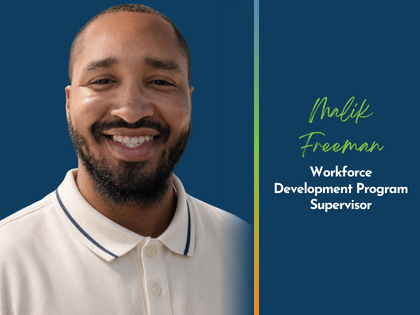
Meet Malik Freeman: Workforce Development Program Supervisor
Meet Malik Freeman, Workforce Development Program Supervisor at Second Harvest, and learn how our workforce development program, College Corps and Cultivate help people build skills, confidence and careers while getting more nutritious food into the community! Read More -
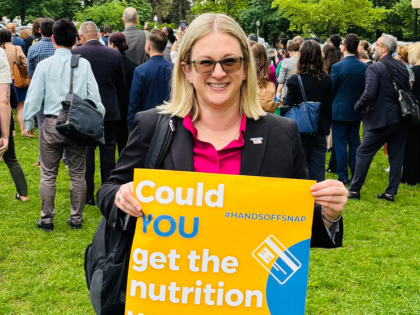
Meet Malia Cary: Director of Government Affairs and Community Relations
Meet Malia Cary, Director of Government Affairs and Community Relations at Second Harvest, and learn about her role and how advocacy helps create an Orange County with food and nutritional security for all! Read More -
The Need Is Growing: New Data Reveals Rising Food Insecurity Across Orange County
Food insecurity in Orange County rose 6% in 2024, with child hunger up 27%. Second Harvest breaks down the latest Map the Meal Gap data. Read More -
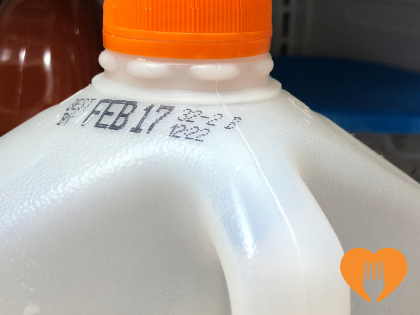
Clearer Labels, Less Waste: What California’s AB 660 Means for Orange County
California's AB 660 replaces confusing food date labels with two clear terms in 2026. See what it means for food waste in Orange County. Read More -
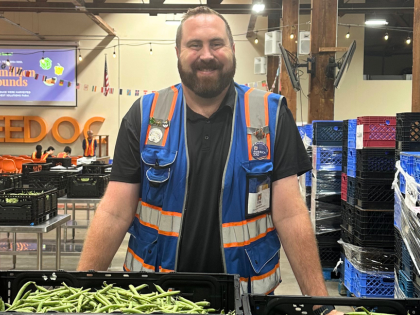
Meet Tim Crosser: Food Processing Supervisor
Meet Tim Crosser, Food Processing Supervisor at Second Harvest, and learn about his role and how volunteers help to create an Orange County with food and nutritional security for all! Read More -
Responding Together: Supporting the Garden Grove Community
See how Second Harvest partnered with local organizations to support the community & provide food assistance during the Garden Grove incident. Read More -
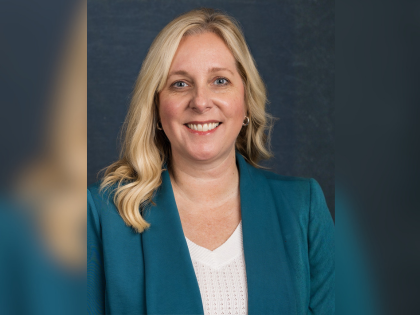
Meet Jennifer Medina: Our Chief People and Culture Officer
Meet Jennifer Medina, Chief People and Culture Officer at Second Harvest, and learn how the her work makes this a great place to work for! Read More -
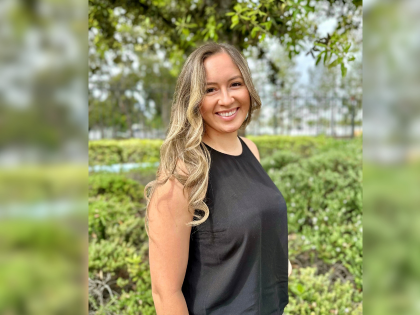
Meet Clarissa Green: Supporting Our Kids Cafe Program
Meet Clarissa Green, Kids Cafe Program Specialist at Second Harvest, and learn how the her work supports children across Orange County. Read More -
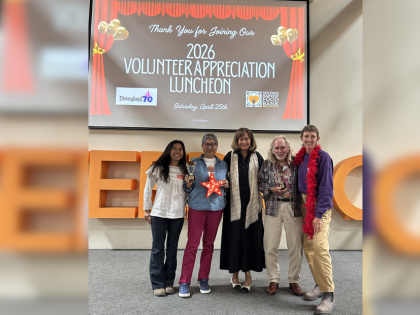
Honoring Our Volunteers: 2026 Volunteer Appreciation Luncheon
Second Harvest recognized volunteers at its 2026 Volunteer Appreciation Luncheon, celebrating those helping fight food insecurity. Read More
Meet Malia Cary: Director of Government Affairs and Community Relations
Meet Malia Cary: Director of Government Affairs and Community Relations
What’s your role at Second Harvest and how long have you been with the organization?
I’m the Director of Government Affairs and Community Relations, and this October I’ll celebrate five years with Second Harvest.
I lead Second Harvest’s government affairs and community relations efforts, working with elected officials, coalition partners and community organizations to strengthen nutrition programs, advance public policy and help ensure the voices of the community members we serve are represented in decisions that affect them.
What inspired you to join Second Harvest?
I was drawn to Second Harvest because there was an opportunity to apply my policy background in service of the community where I grew up, Orange County. Leaning into that experience – I was inspired to strengthen nutrition programs and advocate for the community members who don’t always have a voice. It allows me to combine work that challenges me professionally with a mission I genuinely care about.
Tell us about your role as Director of Government Affairs and Community Relations. Who are the key stakeholders you work with and what does that work involve on a day-to-day basis?
Government Affairs is about helping decision-makers understand what’s happening in our community before they make decisions that affect it.
On a day-to-day basis, my role involves building relationships with elected officials and their staff at every level of government, from city councils and the Orange County Board of Supervisors to the California State Legislature and Congress. My team and I keep them informed about what we’re seeing across Orange County, what our Partner Network is experiencing, and how policy decisions affect access to nutritious food.
We want Second Harvest to be a trusted resource. When elected officials need information about food insecurity or nutrition programs, we want them to know they can turn to us for reliable data, community insights and real-world perspectives.
Last year, my role expanded to include community relations. I also oversee our volunteer Ambassador Program, whose members represent Second Harvest at community events, connect people with food resources and help community members learn how they can volunteer, donate or advocate alongside us.
What does success look like in your position?
Success means making sure the voices of our community are represented when important decisions are being made at every level of government.
Elected officials balance hundreds of competing priorities. Our responsibility is to ensure food insecurity remains part of those conversations by sharing what community members are experiencing and elevating their voices.
Advocacy is unique because meaningful progress rarely comes from one meeting or one conversation. We work alongside Feeding America, California’s network of food banks and many coalition partners, so every policy win is the result of long-term relationships, collaboration and persistence.
If we’re helping ensure community members have a seat at the table and their experiences are informing policy decisions, then I know we’ve made a meaningful impact.
What do you enjoy most about being part of Second Harvest? Is there a favorite memory you have from your time here?
One of my favorite things about working at Second Harvest is the people. Every member of our team is incredibly talented, passionate and committed to our mission.
I joined the organization during the COVID-19 pandemic, so I had a front-row seat watching our team adapt to an unprecedented level of need almost overnight. Every department found new ways to serve the community, respond to changing circumstances and support one another through an incredibly challenging time. While the work was often serious, we always made space for laughter and for celebrating the small wins. That balance has stayed with me and is one of the reasons I love being part of this team.
I’m also proud of how our advocacy work as an organization has expanded over the last five years. One moment that stands out was helping advocate for an increase in CalFood funding from the governor’s proposed $8 million to a final $80 million included in the state budget. CalFood is a state-funded program that provides resources to food banks to purchase California-grown food for distribution and seeing food banks across California come together around a shared goal reinforced just how powerful collaboration can be. It’s a reminder that creating lasting change isn’t just about responding to today’s needs; it’s also about helping shape policies that strengthen our communities for years to come.
Since the COVID-19 pandemic, last fall’s federal government shutdown and the rollout of H.R. 1, nutrition programs like CalFresh/SNAP, WIC and school meals have become increasingly important. How has the policy landscape shifted, and why is understanding it so critical to how Second Harvest serves the community?
The policy landscape has changed dramatically over the last five years. When I joined Second Harvest, we were in the middle of the COVID-19 pandemic and there was significant emergency relief funding available to help meet the unprecedented level of need. As that temporary assistance ended, our focus has shifted toward protecting and strengthening the long-term nutrition programs that families rely on daily.
One of the biggest misconceptions about our industry is that food banks can solve food insecurity on their own. We can’t.
Public nutrition programs each play a different role in helping people access nutritious food. SNAP (Supplemental Nutrition Assistance Program) helps eligible individuals and families purchase groceries each month. WIC (Special Supplemental Nutrition Program for Women, Infants and Children) provides nutritious foods and nutrition education for pregnant women, new mothers, infants and young children. School meal programs help ensure children have access to breakfast and lunch during the school day.
Together, these programs form the foundation of our nation’s nutrition safety net. However, not everyone experiencing food insecurity qualifies for federal nutrition assistance. In Orange County, 55.9% of food-insecure individuals have incomes or assets that may be too high to qualify for CalFresh (California’s SNAP program), despite still struggling to afford nutritious food.
That’s where food banks play a critical role. Second Harvest and its Partner Network help fill the gaps by serving community members who don’t qualify for public assistance, whose benefits don’t fully meet their needs or who need temporary support during difficult circumstances. Public nutrition programs and the charitable food system work together to help ensure more community members have access to nutritious food.
You steward relationships with elected officials across city, county, state and federal government. What does it take to build trust with so many stakeholders, and why is that foundation so important when it’s time to advocate on behalf of Second Harvest and the community?
Advocacy starts with relationships. Before we ever ask an elected official to support a policy or funding priority, we spend time getting to know them, understanding what matters to them and learning how they best serve their communities.
I approach every relationship by seeing people first, not titles. Over time, many of those professional relationships become genuine friendships, and that trust makes collaboration much more natural.
When important policy decisions arise, those conversations don’t begin from scratch. They’re built on years of communication, credibility and mutual respect.
Last year, you joined the effort that increased CalFood funding in the state budget from $8 million to $80 million. Walk us through that campaign and what it taught you about the power of coordinated advocacy.
CalFood was one of the clearest examples I’ve seen of advocacy making a measurable difference.
Food banks across California came together around one shared priority and spent months meeting with legislators, making phone calls, sending emails and helping decision-makers understand what food banks were experiencing across the state.
When the governor’s preliminary budget proposed $8 million for CalFood, we knew it wasn’t enough to meet the growing need. Through sustained advocacy across California’s network of food banks, legislators ultimately increased funding to $80 million.
Advocacy can sometimes feel difficult to measure because so many people contribute to the outcome, but the successful CalFood advocacy campaign showed the power of working together around one shared goal.
Beyond trips to Sacramento and Washington, D.C., you’ve helped build grassroots advocacy programs for the general public, people with lived experience and Second Harvest’s partner network. Why was it important to bring advocacy down to that level, and what have you learned from doing that?
From the beginning, we believed the people experiencing food insecurity should help shape our advocacy priorities.
Rather than deciding what to advocate for on behalf of the community, we wanted community members to tell us what matters most to them. That led us to create advocacy programs that equip people with lived experience, community advocates and our Partner Network with the skills and confidence to share their stories with policymakers.
We’ve also been intentional about making sure people feel supported throughout that process. Sharing personal experiences can be difficult, so we work to ensure community members have the tools they need to advocate without feeling re-traumatized.
Those voices are incredibly powerful. They’re the reason this work exists, and they should help guide where it goes.
As Hunger Action Month approaches next month, what do you wish more people understood about the connection between public policy and food insecurity in Orange County?
One thing I wish more people understood is that policy and politics aren’t the same.
I believe food insecurity is a solvable problem. We have enough food to feed everyone. The challenge is ensuring that food reaches the people who need it and that’s where good public policy plays such an important role. Every decision made at the local, state and federal levels helps shape how resources reach our communities, which is why advocacy matters.
You don’t have to be politically active to care about the policy decisions that affect your community. These decisions influence how people access nutritious food every day.
Can you tell us a little about Hunger Action Month and how the community can get involved?
Hunger Action Month is a nationwide campaign led by Feeding America every September to raise awareness about food insecurity and inspire people to take action.
There are so many ways to get involved. Volunteer with us, donate if you’re able, take a tour of the Food Bank or attend one of our community events throughout the month.
Even something as simple as starting a conversation about food insecurity with your family, friends or coworkers can help build awareness and encourage others to get involved. Every action, big or small, helps strengthen our community.
Looking ahead, what policy priorities are you keeping an eye on, and how can our community make its voice heard alongside yours?
Over the next year, we’ll be closely monitoring the implementation of H.R. 1 and how its provisions affect the community we serve. We’ll also continue following the next Farm Bill, should that happen this term, and we’ll prepare to educate newly elected officials as they take office following this year’s election
Advocacy is an ongoing process, and education is a big part of that work. Every time new elected officials are sworn in, we begin building new relationships and helping them understand who Second Harvest is, the work we do and the needs we’re seeing across Orange County.
Community members can support that work by staying informed and connecting with their own elected officials. Attending a city council meeting, writing an email or simply letting your representatives know that ensuring community members have access to nutritious food is important to you. Even a five-minute email can help elevate an issue and remind decision-makers that it matters to the people they represent.
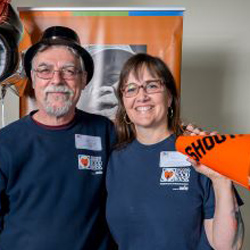 Jill Wilson decided to volunteer with Second Harvest in 2008 when she was in between jobs and looking for a way to apply her talents that could benefit the community. She arrived one day at Second Harvest’s former distribution center in Orange, ready to serve, and felt immediately connected to the mission.
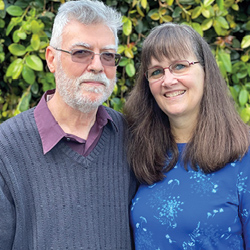 Like Jill and Ian, other friends of the food bank may be looking for ways to connect meaningfully with Second Harvest to help those experiencing hunger in Orange County for years to come. One simple way to make a significant impact, while achieving peace of mind, is by creating a will or revocable living trust with our partner, FreeWill.
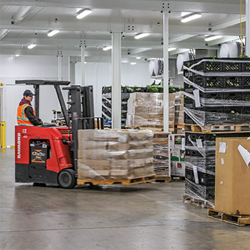 Last spring, here at Second Harvest we completely revamped our focus to proactively purchase fresh nutrition for those in need, ensuring a steady pipeline of protein, dairy, eggs, fruits and vegetables to our approximately 300 partner and program sites. As a next step, we recently unveiled our new, 6,200-square-foot cold storage facility and two additional cold docks that establish a “cold chain” at our distribution center in Irvine. This gives us a total of 14,550 square feet of cold storage, which greatly enhances our ability to source and distribute more nutritious food.
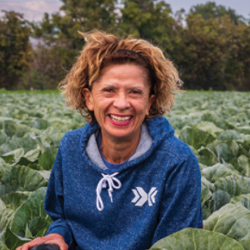 March is National Nutrition Month, an annual awareness campaign that encourages us to learn about nutrition, develop healthy eating habits and discover the fun of being physically active. At Second Harvest Food Bank of Orange County, we strive to provide everyone in Orange County with the nutrition they need to grow and excel in life.
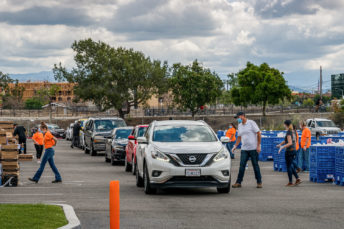 Second Harvest continues to fight increasing food insecurity through our Pop-Up Drive Thru food distributions with the help of many amazing volunteers and it is no surprise that many of them are mothers. Jacqueline is one such volunteer and I wanted to learn more of her story.
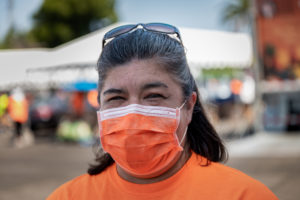 here to volunteer representing other mothers…to give back to the community, to be a role model to my children. As a mother, as a woman, as a friend, as a wife…you have so many hats you have to put on and one of them is giving. When I go home my daughter asks me, “Mom what did you do today?” And I say, “I got to give back to people, people that really don’t have as much as we do.” Hopefully she sees me doing this and then as she gets older, she’ll want to give back just the same way.”
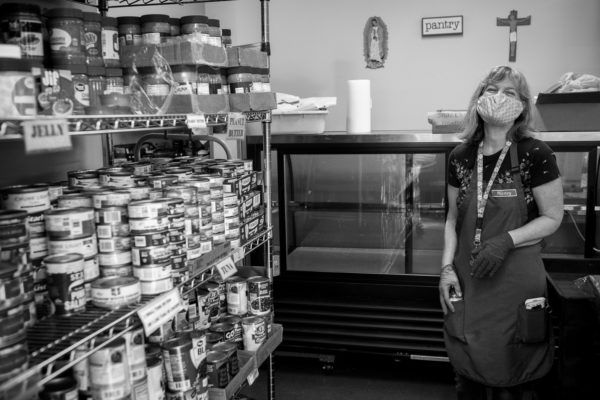 Pantry. Their style traditionally has always been very welcoming and focused on building relationships with those they serve. They would put out coffee and pastries and spend time talking with the families who would come early just to socialize.
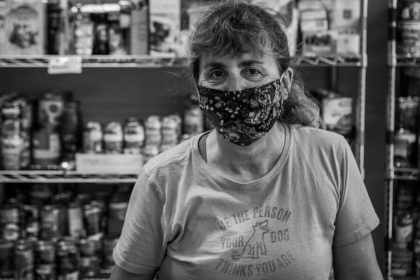 One of Nancy’s key volunteers, Mary Kaye, also shared insights. Mary Kaye is an emergency room doctor who has been spending much of her spare time serving at the Saint Timothy pantry. She began volunteering pre-COVID by taking blood pressures on pantry days and translating for Spanish-speaking clients.. All the changes have her missing conversations and connecting with the families they serve.
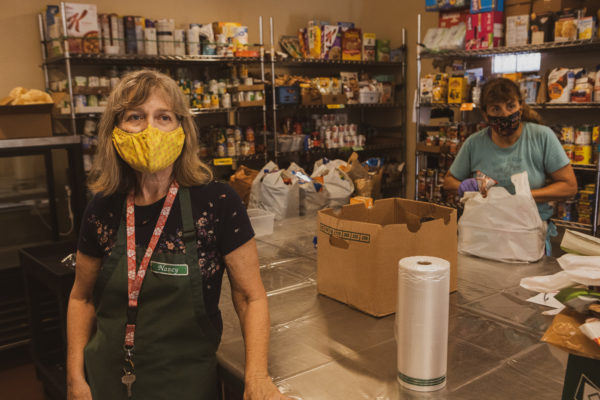 can take your blood pressure soon,” and encouraging them.”
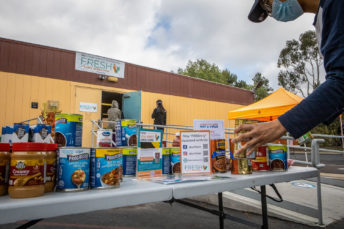 Whatever the situation that keeps students on campus and struggling to feed themselves, the Fresh Basic Needs Hub at UCI remains open to serve them, supported by food from Second Harvest. Student hunger is a serious challenge, made even worse by the pandemic, but Fresh, as it’s called, has the mission to provide for the basic needs of UCI students, allowing them to focus on academics.
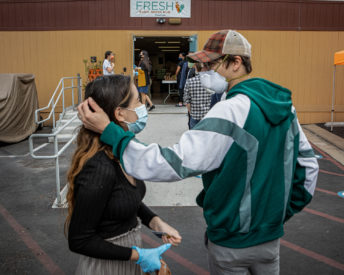 Last week did not feel hopeful. Seeing the injustice of the past few days makes me cringe. It causes me to grieve when I see people treated unfairly or worse. But I’m choosing to move forward with hope. How can I have hope this week? Because I know Andrea and I see how she treats people who sometimes feel trapped. The team at Fresh, and all the other college pantries in Orange County serve as a lifeline for their students, providing for basic needs and offering a dignified experience for everyone who comes to them for help. Their service is a beacon of hope in the darkness.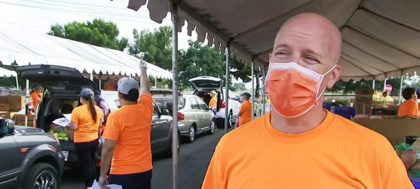
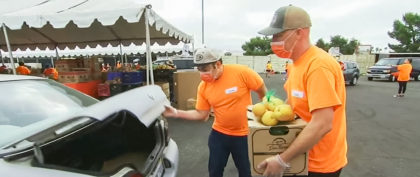 redirected those emotions toward survival and humility. While it was a very difficult decision, Stephen and Kristina decided that in order to make it through this crisis, they would need to receive assistance the first time in their lives. This is what it means to be newly vulnerable.