In 2025 with funding support from Feeding America and the Orange County Hunger Alliance, the Food Bank conducted a Service Area Assessment (SAA) to understand the needs of those impacted by food insecurity in Orange County and describe how we meet those needs. In addition to reviewing existing data sources, we employed community engagement strategies and collected data directly from community members across our partner network to examine their perceptions and experiences with the charitable food system. We will use descriptive findings from the assessment to drive our operational and strategic decisions and better serve Orange County community members who have inconsistent access to nutritious food.
The public documents attached vary by length and detail:
Overview & Key Findings
A 16-page booklet that summarizes our community-based research plan, expands on results from surveys and focus groups, which includes direct quotes, and briefly describes our next steps.
Detailed Report
The full, technical report which includes the Executive Summary, a detailed research plan (including strengths and limitations), full descriptive results, key learnings, and an appendix of data collection materials.
This work would not be possible without the 13 Community Advisory Board members representing our Partner Network, academic partners, and Food Bank staff and advocate who met monthly to provide key input in the empirical research process (supplemental material: Engaging a Community Advisory Board). This includes:
Julia Bautista (Mercado el Sol)
Lauren Carich (Western Community Housing)
Jaime Marquez (Delhi Center)
Robin Rush (Recovery Road)
Marlene Santiago (Boys and Girls Club of Garden Grove)
Dr. Denise Payán (Wen School of Population & Public Health at UC Irvine)
Dr. John Carroll (Department of Geography & the Environment at CSU Fullerton)
Dr. Virginia Gray (Department of Family and Consumer Sciences at CSU Long Beach)
Mia DiLalla (Community Champion at SHFBOC)
Malia Cary (Director of Government Affairs and Community Relations at SHFBOC)
Jazlyn Ortuño-Nuñez (Program Supervisor: Youth Hunger Programs at SHFBOC)
Manuel Marroquin (Research Intern at SHFBOC)
Stephanie Perez Martinez (Research intern at SHFBOC)
For questions, please contact us at research@feedoc.org or (949) 653-2900.

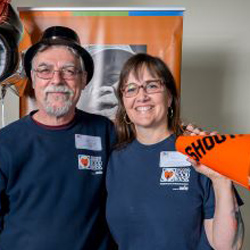 Jill Wilson decided to volunteer with Second Harvest in 2008 when she was in between jobs and looking for a way to apply her talents that could benefit the community. She arrived one day at Second Harvest’s former distribution center in Orange, ready to serve, and felt immediately connected to the mission.
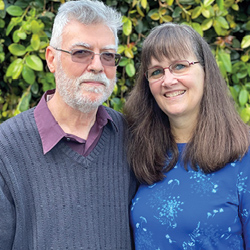 Like Jill and Ian, other friends of the food bank may be looking for ways to connect meaningfully with Second Harvest to help those experiencing hunger in Orange County for years to come. One simple way to make a significant impact, while achieving peace of mind, is by creating a will or revocable living trust with our partner, FreeWill.
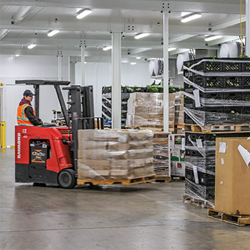 Last spring, here at Second Harvest we completely revamped our focus to proactively purchase fresh nutrition for those in need, ensuring a steady pipeline of protein, dairy, eggs, fruits and vegetables to our approximately 300 partner and program sites. As a next step, we recently unveiled our new, 6,200-square-foot cold storage facility and two additional cold docks that establish a “cold chain” at our distribution center in Irvine. This gives us a total of 14,550 square feet of cold storage, which greatly enhances our ability to source and distribute more nutritious food.
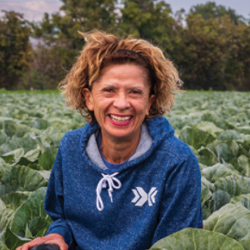 March is National Nutrition Month, an annual awareness campaign that encourages us to learn about nutrition, develop healthy eating habits and discover the fun of being physically active. At Second Harvest Food Bank of Orange County, we strive to provide everyone in Orange County with the nutrition they need to grow and excel in life.
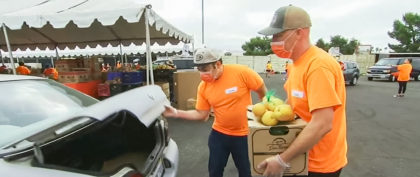
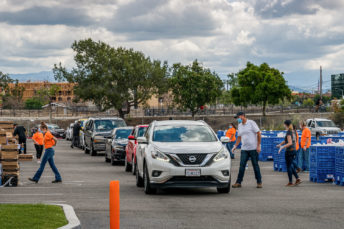 Second Harvest continues to fight increasing food insecurity through our Pop-Up Drive Thru food distributions with the help of many amazing volunteers and it is no surprise that many of them are mothers. Jacqueline is one such volunteer and I wanted to learn more of her story.
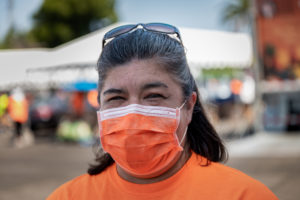 here to volunteer representing other mothers…to give back to the community, to be a role model to my children. As a mother, as a woman, as a friend, as a wife…you have so many hats you have to put on and one of them is giving. When I go home my daughter asks me, “Mom what did you do today?” And I say, “I got to give back to people, people that really don’t have as much as we do.” Hopefully she sees me doing this and then as she gets older, she’ll want to give back just the same way.”
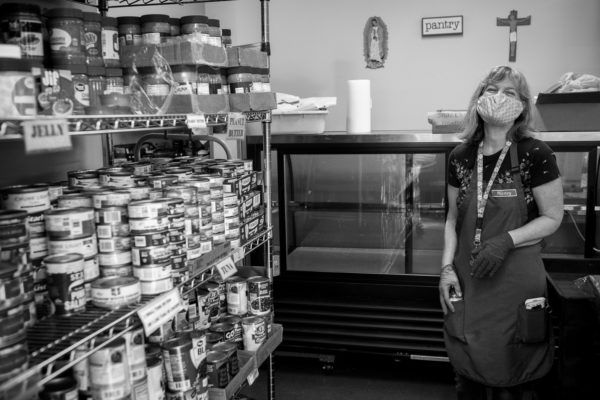 Pantry. Their style traditionally has always been very welcoming and focused on building relationships with those they serve. They would put out coffee and pastries and spend time talking with the families who would come early just to socialize.
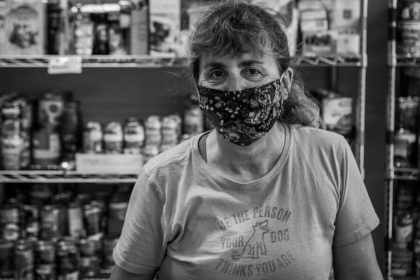 One of Nancy’s key volunteers, Mary Kaye, also shared insights. Mary Kaye is an emergency room doctor who has been spending much of her spare time serving at the Saint Timothy pantry. She began volunteering pre-COVID by taking blood pressures on pantry days and translating for Spanish-speaking clients.. All the changes have her missing conversations and connecting with the families they serve.
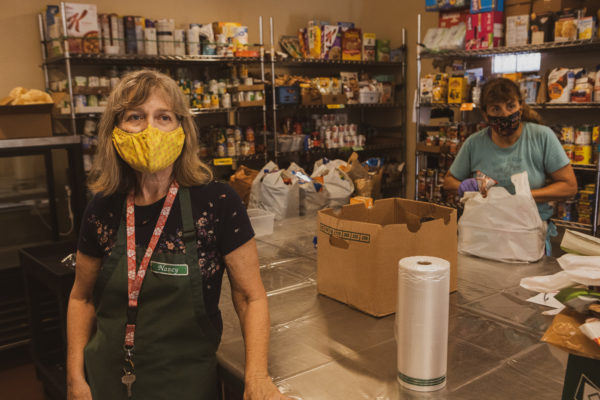 can take your blood pressure soon,” and encouraging them.”
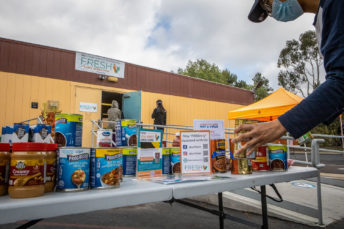 Whatever the situation that keeps students on campus and struggling to feed themselves, the Fresh Basic Needs Hub at UCI remains open to serve them, supported by food from Second Harvest. Student hunger is a serious challenge, made even worse by the pandemic, but Fresh, as it’s called, has the mission to provide for the basic needs of UCI students, allowing them to focus on academics.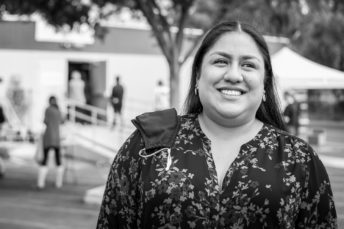
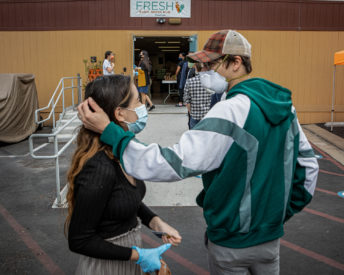 Last week did not feel hopeful. Seeing the injustice of the past few days makes me cringe. It causes me to grieve when I see people treated unfairly or worse. But I’m choosing to move forward with hope. How can I have hope this week? Because I know Andrea and I see how she treats people who sometimes feel trapped. The team at Fresh, and all the other college pantries in Orange County serve as a lifeline for their students, providing for basic needs and offering a dignified experience for everyone who comes to them for help. Their service is a beacon of hope in the darkness.
 redirected those emotions toward survival and humility. While it was a very difficult decision, Stephen and Kristina decided that in order to make it through this crisis, they would need to receive assistance the first time in their lives. This is what it means to be newly vulnerable.