-
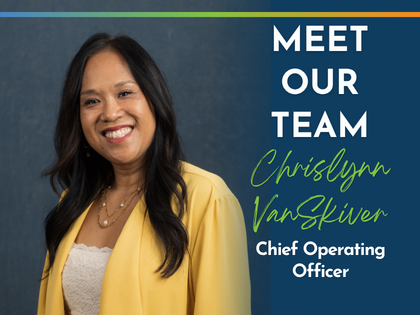
Meet Chrislynn VanSkiver: Chief Operating Officer
Meet Chrislynn VanSkiver, Chief Operating Officer at Second Harvest, and learn about her role and how the Food Bank’s operations team moves nutritious food to Orange County with efficiency and dignity! Read More -
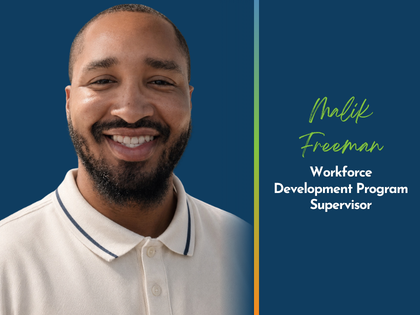
Meet Malik Freeman: Workforce Development Program Supervisor
Meet Malik Freeman, Workforce Development Program Supervisor at Second Harvest, and learn how our workforce development program, College Corps and Cultivate help people build skills, confidence and careers while getting more nutritious food into the community! Read More -
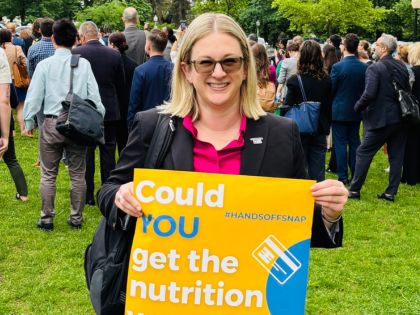
Meet Malia Cary: Director of Government Affairs and Community Relations
Meet Malia Cary, Director of Government Affairs and Community Relations at Second Harvest, and learn about her role and how advocacy helps create an Orange County with food and nutritional security for all! Read More -
The Need Is Growing: New Data Reveals Rising Food Insecurity Across Orange County
Food insecurity in Orange County rose 6% in 2024, with child hunger up 27%. Second Harvest breaks down the latest Map the Meal Gap data. Read More -
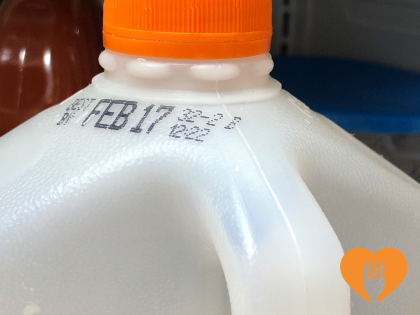
Clearer Labels, Less Waste: What California’s AB 660 Means for Orange County
California's AB 660 replaces confusing food date labels with two clear terms in 2026. See what it means for food waste in Orange County. Read More -
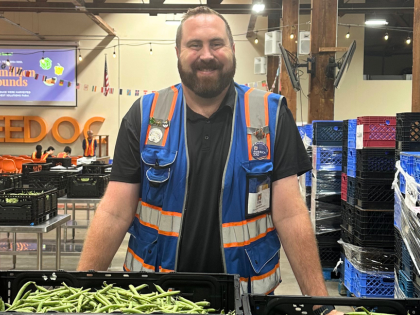
Meet Tim Crosser: Food Processing Supervisor
Meet Tim Crosser, Food Processing Supervisor at Second Harvest, and learn about his role and how volunteers help to create an Orange County with food and nutritional security for all! Read More -
Responding Together: Supporting the Garden Grove Community
See how Second Harvest partnered with local organizations to support the community & provide food assistance during the Garden Grove incident. Read More -
Meet Jennifer Medina: Our Chief People and Culture Officer
Meet Jennifer Medina, Chief People and Culture Officer at Second Harvest, and learn how the her work makes this a great place to work for! Read More -
Meet Clarissa Green: Supporting Our Kids Cafe Program
Meet Clarissa Green, Kids Cafe Program Specialist at Second Harvest, and learn how the her work supports children across Orange County. Read More
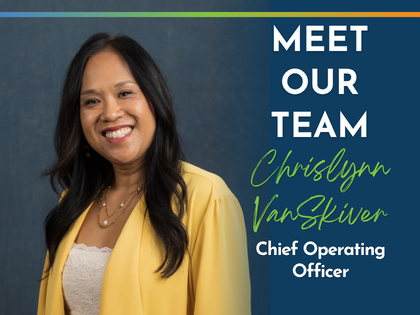
Meet Chrislynn VanSkiver: Chief Operating Officer
Meet Chrislynn VanSkiver: Chief Operating Officer
What is your role at Second Harvest, and how long have you been with the organization? What first inspired you to join?
I am the Chief Operating Officer at Second Harvest, and I’ve been with the Food Bank for over 10 years. I’ve served in many different roles, starting in development, moving to volunteerism and then moving into operations during the height of COVID. From there, I had the opportunity to elevate into the Chief Operating Officer position. I love operations and everything it represents.
My path to Second Harvest is unique. My background is in public relations, sales and large-scale events, and I spent more than six years at ClubCorp, the largest owner-operator of country clubs. When I was pregnant with my second child, I was diagnosed with cancer. After she was born and I went through treatment, I felt like I’d been given a second wind at life. Surviving cancer has a way of clarifying what actually matters, and I knew that whatever I did next, I wanted it to make a difference.
Around that same time, my oldest son, who was seven, became really unsettled by the people experiencing homelessness in our neighborhood. It was Thanksgiving, and he was worried they wouldn’t have a holiday meal. We’re Filipino, and food is central to our culture. It’s how we show love in our family. That became our catalyst to do something. We gathered friends and brought a Thanksgiving meal and care packages to our local shelter, Friendship Shelter. To this day, we still do that quarterly with close family and friends.
Meanwhile, I had already been involved with Second Harvest from the donor side, organizing the Food Bank’s former golf tournament and working with Nicole Suydam, who was CEO at the time. When a position opened on the development team managing the organization’s major events, everything aligned. That’s how I got my foot in the door at Second Harvest, and I haven’t looked back.
You’ve held several leadership roles at Second Harvest, spanning fund development, volunteer engagement, and operations. How have those experiences shaped the way you lead as chief operating officer?
I think they’ve given me an unbiased, holistic perspective of the Food Bank. When I talk with my teams, I’m not only thinking about operations or only thinking about transportation. We think about the end user, the community member, and how all of those pieces work together. In my opinion, we could not have scaled the way we have, and kept and enhanced our culture, without understanding those pieces. It’s not about each siloed area of focus. It’s about how we work in concert together.
That perspective matters because I support close to 80% of the organization. Operations includes our processing teams — receiving, inventory, processing and order pulling — as well as facilities and food safety, programs and services, transportation and logistics, sourcing and strategic initiatives and planning. Really, it’s anything having to do with the movement of food in and out of our distribution center.
My role is successful because I have strong leaders supporting it. I have a strong director team that works collaboratively, and the organization could not be as operationally sound without them. I also could not do what I do without a leader like Claudia. If she didn’t allow us to be psychologically safe, to make mistakes and to make the hard right calls, I couldn’t do my job, especially the way I lead. Even in the rigor and the discipline, there’s so much grace, compassion and support for our team members. To me, that combination is the secret sauce. You have to have both, like ketchup and mustard. You can’t just have one.
What does success look like in your role? How do you know Second Harvest is operating effectively and meeting the needs of the community?
Success looks like community members having consistent access to food at our distribution sites, and the folks here at the Food Bank, whether they’re full-time employees or volunteers, having a positive, impactful experience.
We’re in the middle of strategic planning right now, and how we measure success today will look different from how we measure it in the future. Traditionally, we’ve looked at pounds of food distributed to understand the impact of our programs. But pounds distributed doesn’t tell us whether we’re getting the right food to the right places for the right people. That’s why I also look closely at our Partner Network. How are our pantries moving along the spectrum of choice? Does the data show new people coming into pantries because they feel comfortable accessing food, without stigma?
Client choice means an individual can go to a distribution and choose what they want to eat, just like they’re shopping, rather than being handed a box or bag of food that was selected for them ahead of time. To us, a predetermined box offers less dignity. If I’m gluten-free and you hand me crackers, what am I going to do with that? We want the experience to feel interchangeable: did you shop at Ralph’s (or another major grocery retailer) today, or did you shop at the pantry?
What do you enjoy most about being part of Second Harvest? Is there a favorite memory or accomplishment from your time here?
What I enjoy most is that we have the freedom to innovate, make a difference and try new things without a lot of red tape. If someone comes forward with an idea, and it makes sense, aligns with our resources and supports the mission, there’s truly nothing holding us back. We’re a large organization, but we’re nimble enough to act on good ideas. Many of the programs we have today exist because we make room for that, and I think that’s so cool. The credit always goes to our team. I just try to make sure the conditions are in place for them to do what they do best.
Some of my favorite moments have come during our hardest ones. That’s when you go through something difficult together, look back at everything you’ve accomplished and realize we can
prevail. It’s the silly moments I remember most, like during COVID, when we were working so hard but still laughing alongside each other while stacking boxes and filling trucks. Or more recently, during our SNAP response, showing up at 4 a.m. and laughing at the little things that happen along the way. My favorite memories are in those small moments, not the big ones.
Many people see the nutritious food that reaches community members but may not realize everything that happens behind the scenes. What does it take to move food safely and efficiently from donors and suppliers through Second Harvest and out to our Partner Network?
Woof! That is a big question. We truly are a logistics organization. We oversee more than 300 partner distribution locations and are responsible for the safety of more than 100 staff members and 100 volunteers here every day. Keeping all of that moving takes significant planning so every team is on the same page, lots of reflection to identify bottlenecks and remove barriers and really strong communication. We’re constantly assessing: is the pace right? Are we matching our supply with the need? What’s off, and what do we need to readjust? Then the holidays arrive or schools close for break, and we have to adjust the whole operation from soup to nuts to stay on track.
The fact that we distribute a lot of fresh produce adds another layer. Produce typically moves through our facility within five days, if not faster, and product from our farm moves within about 72 hours. When produce arrives, we receive it and quality check it. From there, it’s divided into what we’ll process through a system called “pick and pack” and what partners can take in bins, which can go out even faster. We bring in eight to nine produce items every week. This means that each partner pantry can offer five to seven produce items to community members at their distributions, which helps promote choice.
All of this takes discipline and diligence. I’m highly disciplined and rigorous because that’s what it takes to keep the trains on track. I’m also the reality person. I’ll be honest about what it takes to get something done and how we’ll do it, and we have A, B and C plans ready at any given moment for whatever comes our way. We do that every single day.
How do you ensure operational efficiency and responsible use of resources while keeping dignity and the experience of the people we serve at the center of the work?
I strongly believe efficiency and dignity are not opposing forces. When you get the operations right, dignity follows. If food is moving well and our partners have the resources they need, the people we serve aren’t left waiting, turned away or made to feel like an afterthought. We also build dignity into the model itself by helping our Partner Network adopt the client choice model and working alongside partners to make distributions welcoming, clean and somewhere people want to come back to.
We rely heavily on our procedures, and we’re constantly reviewing them. It’s also been a big push for me to make sure we have enough staff to move product without cutting corners. When you cut corners, it’s not efficient in the long run.
I often say, “Slow is smooth, and smooth is fast." In our industry, we can feel so driven by a sense of urgency, because it is urgent. People need food. But in a big operation, rushing creates more inefficiencies. A slow, smooth cadence ends up being faster because we don’t have to redo work. It matters for safety, too. We work with heavy equipment, large trucks and forklifts, and when you add 100 volunteers who may have never been around that kind of equipment, the risk goes up even higher.
That mindset is a big part of how I lead. I’m even-tempered, and I keep a steady cadence because I have to. I actually train for it! My gym is run by a former Army Special Forces member, and we train with strobe lights and high-intensity music while following directions, so we learn to stay focused on the task at hand. I carry a big responsibility, so I have to train my mind and my emotions.
You helped lead large-scale food distributions during the COVID-19 pandemic, when Second Harvest had to respond to rapidly changing community needs. What stands out to you from that experience, and what did it teach you about building resilient operations?
COVID showed us that we can do anything. During that time, we shifted into direct distribution, which isn’t our typical model, and held pop-up drive-thru distributions that served more than 6,000 community members every week. We held our large-scale distributions at the Honda Center, since we couldn’t do that at our own facility, and we also stored product there, including on the ice rink. The Anaheim Convention Center gave us space for free, too. For 15 weeks, we popped up and popped down every single week.
Everything changed at once. More people needed help, including many who had never needed food assistance before. At the same time, some of our partner agencies closed, especially smaller ones run by older adults who were at higher risk. Our entire volunteer world also shut down, so we had to hire close to 100 people to keep operations running. We ran split shifts, one week on and one week off, and set up a whole second operation at Goodwill of Orange County. That kept people employed and gave us a contingency plan so the Food Bank would never have to shut down.
That said, what stands out most during that time is the people. None of us had a playbook, and our team rose to the occasion. It taught me that systems matter, but culture matters more. When
you’re properly resourced and have the right partners, you really can do anything. We couldn’t have moved the food we did without our community, donor and supplier network.
Second Harvest often brings in expertise from outside the nonprofit space — from logistics partners like QCD to Board members with backgrounds in grocery and retail, and consulting support from BCG on strategic planning. How has tapping into that outside expertise shaped operational innovation at Second Harvest?
Outside expertise inspires us and encourages us to think big. It also affirms that we’re on the right track and following best practices. We have such a wealth of knowledge available to us, and it would be unwise, even foolish, not to lean into it. I’ll take all the support and outside knowledge I can get to make our operations and our teams better. If it’s at our fingertips and people want to help, why wouldn’t we?
It’s actually how I learned operations. Part of it was on-the-job training, but I also leaned heavily on QCD, Quality Custom Distribution, a subsidiary of Golden State Foods. They move food for companies like Starbucks, so their model is very similar to ours. I also learned from our former COO, and, oddly enough, from the world of aerospace. My husband works in aerospace operations, and the model is very similar. The products are just different.
I’m a certified Six Sigma Black Belt, and our operations team went through Six Sigma training, which is built on lean manufacturing principles. That was really the start of our focus on operational excellence. COVID and my tenure have marked our shift from a mom-and-pop food bank, where you just did whatever it took to make it happen, to an organization with strong strategies, strong procedures and clear KPIs.
You led Second Harvest’s 45 by 27 three-year strategic plan, now in its final year. What are you most proud of from that plan, and what will be most important as Second Harvest responds to Orange County’s changing food and nutritional security needs next?
Our goal with 45 by 27 is to distribute 45 million pounds of food into the community by 2027 so we can live out our mission of providing consistent access to nutritious food. We’re on track to reach that goal, if not exceed it. What’s great is that about 70% of what we distribute is cold, perishable, highly nutrient-dense food.
I’m proud that we’re doing it. Even through the hard times, we came back to that aspiration, and our leadership team and Board of Directors said, “Yes, we’re going to keep moving forward." It’s a big investment at a time when funding can be volatile, and I think that speaks volumes about our community’s commitment to this issue. We didn’t just talk about growth. We started building the infrastructure to support it, from investing in transportation to rethinking how food flows through our organization, from sourcing all the way through distribution.
Looking ahead, we’ll always distribute pounds of food. But what are we going to do beyond that to help close the gap? I’m especially excited about the work around proportionality within our Partner Network: being more intentional about strengthening partner capacity and closing the gaps that exist across different service areas. The need in Orange County isn’t going down, and the SNAP crisis made that clear. The work is nowhere near finished.
You have a unique view into so many areas of Second Harvest. What’s something about the organization or our work that you think would surprise people?
I think people are surprised by how sophisticated our operation actually is. A lot of people don’t really understand what a food bank is and how it operates. But when they come here, take the tour and see the scale of our Distribution Center, our fleet and our docks, it clicks. I’m really proud of our operation. We run a tight ship, and we do a lot of things well. We’re like a mini Amazon distribution center, and I think that would shock people.
I say this often: we’re a logistics organization in the charitable food space. People often confuse a food bank with a food pantry. Pantries hand out food directly to community members. As a food bank, we move truckloads of product to the more than 300 partners who do that work.
Honestly, the scale of the logistics surprised me, too. My background is in public relations and event planning. I wrote press releases and planned large-scale high-end events! I never expected to learn so much about supply chain, but it makes sense when you think about it. Everything has to be shipped. We can get food donated for free, but moving it is never free. We truly have to move everything — planes, trains and automobiles.
This isn’t a charity with a few volunteers sorting cans. We stretch every donated dollar in a way that a company driven by profit margins simply can’t. The mission isn’t in spite of the efficiency. In many ways, the mission is what drives it. When the stakes are food on someone’s table, you don’t waste a single resource.
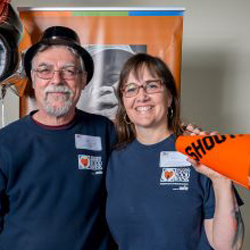 Jill Wilson decided to volunteer with Second Harvest in 2008 when she was in between jobs and looking for a way to apply her talents that could benefit the community. She arrived one day at Second Harvest’s former distribution center in Orange, ready to serve, and felt immediately connected to the mission.
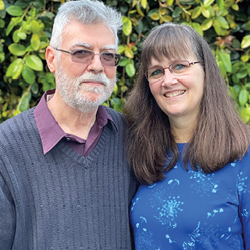 Like Jill and Ian, other friends of the food bank may be looking for ways to connect meaningfully with Second Harvest to help those experiencing hunger in Orange County for years to come. One simple way to make a significant impact, while achieving peace of mind, is by creating a will or revocable living trust with our partner, FreeWill.
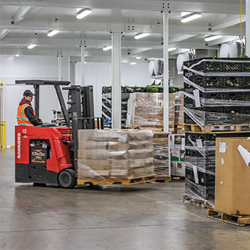 Last spring, here at Second Harvest we completely revamped our focus to proactively purchase fresh nutrition for those in need, ensuring a steady pipeline of protein, dairy, eggs, fruits and vegetables to our approximately 300 partner and program sites. As a next step, we recently unveiled our new, 6,200-square-foot cold storage facility and two additional cold docks that establish a “cold chain” at our distribution center in Irvine. This gives us a total of 14,550 square feet of cold storage, which greatly enhances our ability to source and distribute more nutritious food.
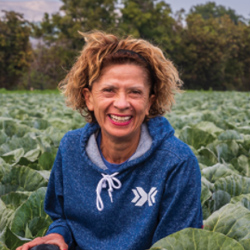 March is National Nutrition Month, an annual awareness campaign that encourages us to learn about nutrition, develop healthy eating habits and discover the fun of being physically active. At Second Harvest Food Bank of Orange County, we strive to provide everyone in Orange County with the nutrition they need to grow and excel in life.
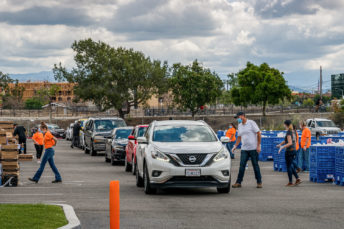 Second Harvest continues to fight increasing food insecurity through our Pop-Up Drive Thru food distributions with the help of many amazing volunteers and it is no surprise that many of them are mothers. Jacqueline is one such volunteer and I wanted to learn more of her story.
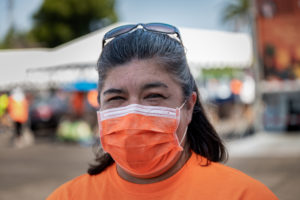 here to volunteer representing other mothers…to give back to the community, to be a role model to my children. As a mother, as a woman, as a friend, as a wife…you have so many hats you have to put on and one of them is giving. When I go home my daughter asks me, “Mom what did you do today?” And I say, “I got to give back to people, people that really don’t have as much as we do.” Hopefully she sees me doing this and then as she gets older, she’ll want to give back just the same way.”
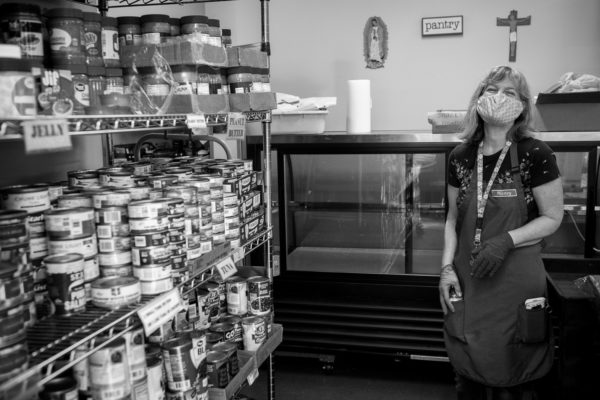 Pantry. Their style traditionally has always been very welcoming and focused on building relationships with those they serve. They would put out coffee and pastries and spend time talking with the families who would come early just to socialize.
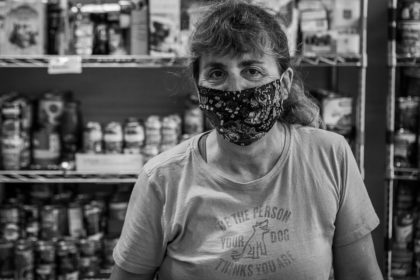 One of Nancy’s key volunteers, Mary Kaye, also shared insights. Mary Kaye is an emergency room doctor who has been spending much of her spare time serving at the Saint Timothy pantry. She began volunteering pre-COVID by taking blood pressures on pantry days and translating for Spanish-speaking clients.. All the changes have her missing conversations and connecting with the families they serve.
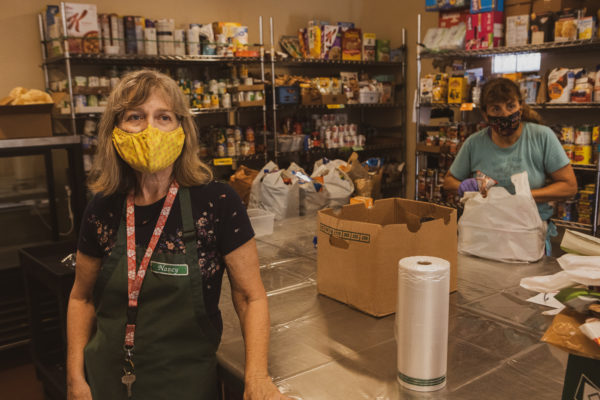 can take your blood pressure soon,” and encouraging them.”
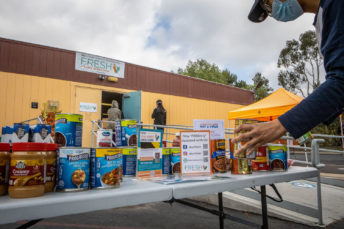 Whatever the situation that keeps students on campus and struggling to feed themselves, the Fresh Basic Needs Hub at UCI remains open to serve them, supported by food from Second Harvest. Student hunger is a serious challenge, made even worse by the pandemic, but Fresh, as it’s called, has the mission to provide for the basic needs of UCI students, allowing them to focus on academics.
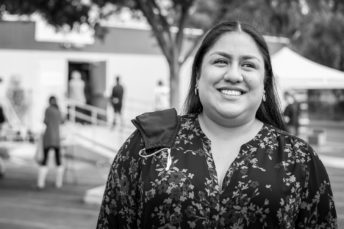
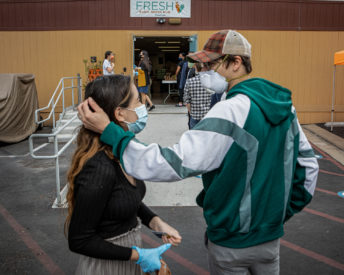 Last week did not feel hopeful. Seeing the injustice of the past few days makes me cringe. It causes me to grieve when I see people treated unfairly or worse. But I’m choosing to move forward with hope. How can I have hope this week? Because I know Andrea and I see how she treats people who sometimes feel trapped. The team at Fresh, and all the other college pantries in Orange County serve as a lifeline for their students, providing for basic needs and offering a dignified experience for everyone who comes to them for help. Their service is a beacon of hope in the darkness.
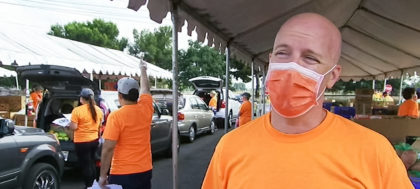
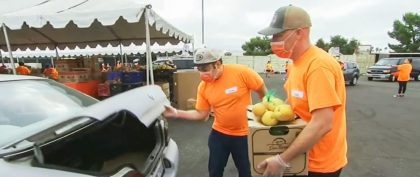 redirected those emotions toward survival and humility. While it was a very difficult decision, Stephen and Kristina decided that in order to make it through this crisis, they would need to receive assistance the first time in their lives. This is what it means to be newly vulnerable.