
Here you will find training materials, helpful documents, contact information and ways to share feedback or stay involved.
What is Grocery Rescue?
The Grocery Rescue Program helps grocery stores donate safe, surplus food to community members experiencing food insecurity, rather than sending it to landfills. This initiative not only supports those in need but also protects our environment by reducing greenhouse gas emissions and promoting sustainability.
Why Participate?
- Food insecurity affects 1 in 9 individuals in Orange County and Grocery Rescue helps us better meet this need.
- SB 1383 compliance requires Tier 1 Food Generators (e.g., supermarkets and large grocery stores) to donate excess edible food to food recovery organizations or be subject to city fines for non-compliance.
- Businesses donating food may qualify for enhanced federal tax deductions under IRS Code §170(e)(3).
- Businesses have reduced disposal costs for compost
and landfill. - Good faith food donations are protected from liability under federal law.

Resource Documents
These downloadable resources are designed to help your store team understand the Grocery Rescue process, ensure food safety and maintain compliance with local and state regulations.
Grocery Rescue Overview


Donation
Dates
A guide explaining our label guidelines and identifying donation-ready products based on code dates.

Donation
Reminders
A guide explaining our label guidelines and identifying donation-ready products based on code dates.

Donation
Facts
A short resource highlighting the Good Samaritan Act and enhanced tax deductions for food donations.
SB 1383
An overview of California’s Senate Bill 1383 and how it applies to edible food recovery requirements for grocery stores and food retailers.

Donation
Signs
Printable signage to display in your store’s backroom, coolers and freezers, helping staff easily identify donation areas.
FEEDBACK
We value your input and use your feedback to improve our processes. Share your experience with the Grocery Rescue Program, what’s working well, where we can improve or any suggestions to make donating easier.
Contact
If you have questions, need to report an issue or want to connect directly with our staff, please reach out to us at Groceryrescue@feedoc.org or 949-653-2900.
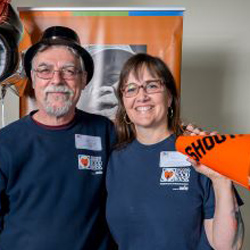 Jill Wilson decided to volunteer with Second Harvest in 2008 when she was in between jobs and looking for a way to apply her talents that could benefit the community. She arrived one day at Second Harvest’s former distribution center in Orange, ready to serve, and felt immediately connected to the mission.
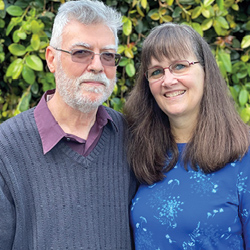 Like Jill and Ian, other friends of the food bank may be looking for ways to connect meaningfully with Second Harvest to help those experiencing hunger in Orange County for years to come. One simple way to make a significant impact, while achieving peace of mind, is by creating a will or revocable living trust with our partner, FreeWill.
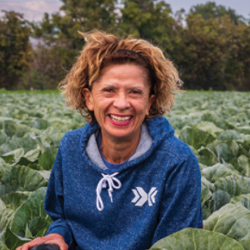 March is National Nutrition Month, an annual awareness campaign that encourages us to learn about nutrition, develop healthy eating habits and discover the fun of being physically active. At Second Harvest Food Bank of Orange County, we strive to provide everyone in Orange County with the nutrition they need to grow and excel in life.
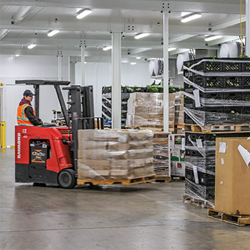 Last spring, here at Second Harvest we completely revamped our focus to proactively purchase fresh nutrition for those in need, ensuring a steady pipeline of protein, dairy, eggs, fruits and vegetables to our approximately 300 partner and program sites. As a next step, we recently unveiled our new, 6,200-square-foot cold storage facility and two additional cold docks that establish a “cold chain” at our distribution center in Irvine. This gives us a total of 14,550 square feet of cold storage, which greatly enhances our ability to source and distribute more nutritious food.
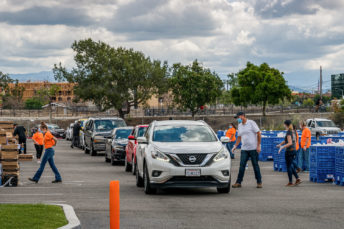 Second Harvest continues to fight increasing food insecurity through our Pop-Up Drive Thru food distributions with the help of many amazing volunteers and it is no surprise that many of them are mothers. Jacqueline is one such volunteer and I wanted to learn more of her story.
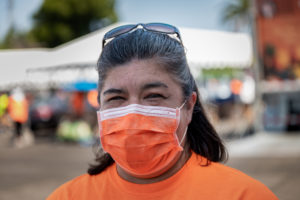 here to volunteer representing other mothers…to give back to the community, to be a role model to my children. As a mother, as a woman, as a friend, as a wife…you have so many hats you have to put on and one of them is giving. When I go home my daughter asks me, “Mom what did you do today?” And I say, “I got to give back to people, people that really don’t have as much as we do.” Hopefully she sees me doing this and then as she gets older, she’ll want to give back just the same way.”
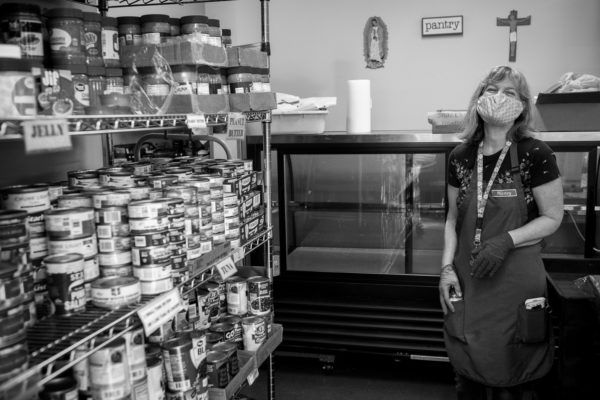 Pantry. Their style traditionally has always been very welcoming and focused on building relationships with those they serve. They would put out coffee and pastries and spend time talking with the families who would come early just to socialize.
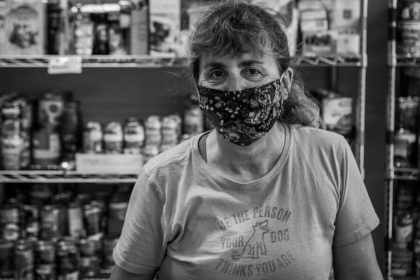 One of Nancy’s key volunteers, Mary Kaye, also shared insights. Mary Kaye is an emergency room doctor who has been spending much of her spare time serving at the Saint Timothy pantry. She began volunteering pre-COVID by taking blood pressures on pantry days and translating for Spanish-speaking clients.. All the changes have her missing conversations and connecting with the families they serve.
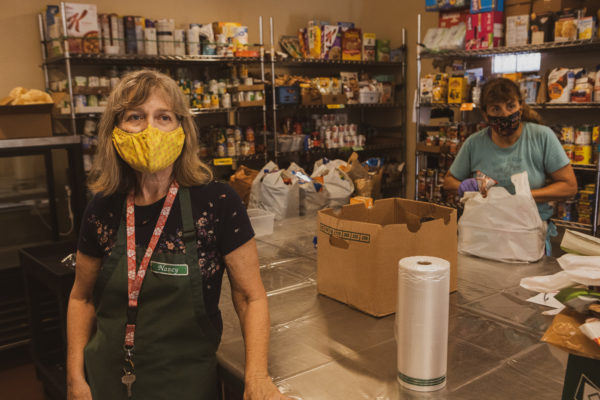 can take your blood pressure soon,” and encouraging them.”
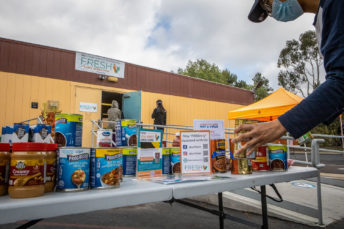 Whatever the situation that keeps students on campus and struggling to feed themselves, the Fresh Basic Needs Hub at UCI remains open to serve them, supported by food from Second Harvest. Student hunger is a serious challenge, made even worse by the pandemic, but Fresh, as it’s called, has the mission to provide for the basic needs of UCI students, allowing them to focus on academics.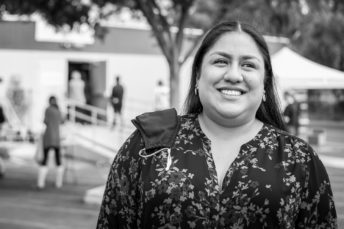
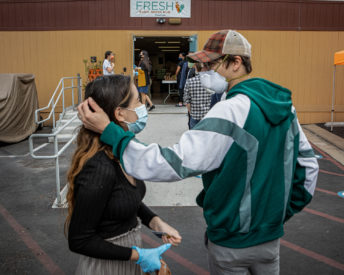 Last week did not feel hopeful. Seeing the injustice of the past few days makes me cringe. It causes me to grieve when I see people treated unfairly or worse. But I’m choosing to move forward with hope. How can I have hope this week? Because I know Andrea and I see how she treats people who sometimes feel trapped. The team at Fresh, and all the other college pantries in Orange County serve as a lifeline for their students, providing for basic needs and offering a dignified experience for everyone who comes to them for help. Their service is a beacon of hope in the darkness.
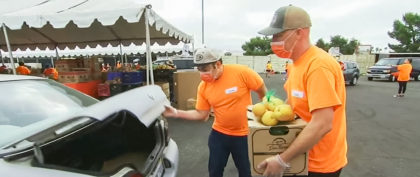 redirected those emotions toward survival and humility. While it was a very difficult decision, Stephen and Kristina decided that in order to make it through this crisis, they would need to receive assistance the first time in their lives. This is what it means to be newly vulnerable.